

Why Daily Reading Review Matters: The Research Behind Drops in the Bucket® Reading
Posted by Frog Publications on 26th Jun 2026
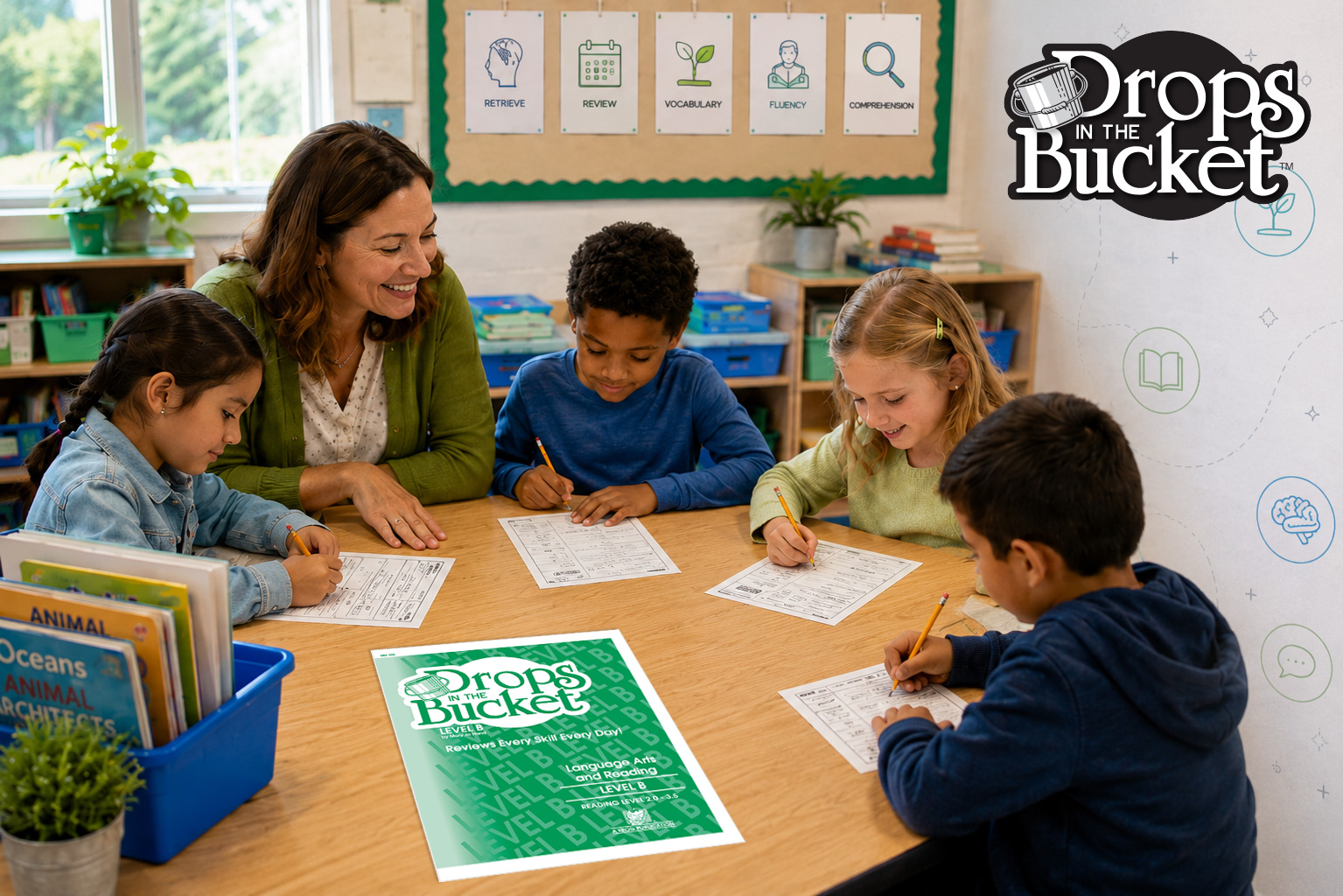
Why Daily Reading Review Matters: The Research Behind Drops in the Bucket® Reading
Reading achievement does not happen all at once. It develops gradually as students build, retain, and apply important literacy skills over time. Foundational skills such as vocabulary, fluency, language conventions, comprehension, word study, and critical thinking all work together to help students become confident, capable readers.
But there is one challenge teachers see again and again: students often forget skills they seemed to know just weeks earlier.
That is why daily reading review is so important.
Drops in the Bucket® Reading was designed around a simple but powerful instructional idea: students benefit when important reading and language arts skills are revisited regularly, practiced consistently, and reinforced over time. Through brief, structured daily review, students strengthen retention, build fluency, expand vocabulary, improve comprehension, and develop greater confidence as readers.
The Problem: Reading Skills Fade Without Review
Reading development is cumulative. Each new skill depends on skills students have already learned. When students learn a vocabulary word, grammar concept, phonics pattern, comprehension strategy, or language skill, that knowledge must remain accessible for future learning.
Without consistent review, even previously mastered skills can fade.
Research in learning science has shown that memory weakens when information is not revisited. Students may understand a skill during initial instruction, perform well on a worksheet or test, and then struggle to recall or apply that same skill later. This can create learning gaps that make future reading tasks more difficult.
In the classroom, this often means teachers must pause instruction to reteach skills that students have already encountered.
Daily reading reinforcement helps solve this problem by giving students regular opportunities to retrieve, apply, and strengthen previously learned literacy skills before they are forgotten.
What Is Daily Reading Review?
Daily reading review is a consistent instructional routine that gives students brief, repeated opportunities to practice important literacy skills. Instead of teaching one skill in isolation and then moving on permanently, daily review keeps key concepts active throughout the school year.
In Drops in the Bucket® Reading, students engage with a variety of reading and language arts skills through a structured, easy-to-follow format. Depending on the level, lessons may include:
- Reading passages
- Vocabulary activities
- Language skills
- Grammar and conventions
- Word study
- Comprehension questions
- Critical thinking
- Cumulative review of previously taught skills
This approach helps students revisit important skills regularly while continuing to build new literacy knowledge.
The Research Behind Drops in the Bucket® Reading
The instructional framework behind Drops in the Bucket® Reading is grounded in research-supported learning principles, including retrieval practice, spaced review, interleaving, cumulative review, vocabulary development, reading fluency, comprehension support, formative assessment, progress monitoring, and MTSS-aligned instruction.
Together, these principles support long-term reading achievement by helping students remember, apply, and build upon essential literacy skills.
Retrieval Practice: Students Remember More When They Recall What They Know
Retrieval practice happens when students actively recall information from memory instead of simply rereading or reviewing it. Research shows that the act of retrieving information helps strengthen memory and improve long-term retention.
In reading instruction, retrieval practice matters because students must constantly access previously learned skills. They need to remember vocabulary meanings, grammar rules, comprehension strategies, word patterns, and language conventions while reading and responding to text.
Drops in the Bucket® Reading incorporates retrieval practice by asking students to regularly revisit and apply skills they have already learned. This helps keep literacy knowledge active and easier to access when students need it.
Spaced Review: Learning Lasts Longer When Practice Is Spread Out
Spaced review, also called distributed practice, means students revisit skills over time instead of practicing them only in one short unit. Research has consistently shown that learning is stronger when practice opportunities are spread across days, weeks, and months.
This is especially important in reading because literacy skills are not one-time lessons. Vocabulary, fluency, comprehension, grammar, and word study all require repeated exposure and practice.
With Drops in the Bucket® Reading, previously taught skills continue to appear throughout the instructional sequence. This gives students repeated opportunities to strengthen retention and reduce forgetting.
Interleaving: Students Learn to Apply Skills in Real Reading Situations
Interleaving means mixing different skills together instead of practicing only one skill at a time. While blocked practice may feel easier at first, interleaving encourages students to think more deeply, choose the right strategy, and apply skills flexibly.
This mirrors the way real reading works.
When students read, they do not use vocabulary, grammar, fluency, and comprehension separately. They use these skills together. A strong reader must recognize words, understand language structures, make meaning from context, and think critically all at the same time.
Drops in the Bucket® Reading supports interleaved learning by including varied literacy tasks within each lesson. Students may work with vocabulary, comprehension, language skills, grammar, and word study on the same page, helping them connect and apply skills in meaningful ways.
Cumulative Review: Keeping Earlier Skills Active
Cumulative review is one of the key features of effective instruction. Instead of teaching a skill once and leaving it behind, cumulative review brings previously taught concepts back again and again.
This helps students maintain mastery.
In Drops in the Bucket® Reading, students revisit earlier reading and language arts skills throughout the program. This ongoing reinforcement helps strengthen long-term memory, support skill transfer, and build confidence.
Cumulative review is especially helpful for students who need extra practice, students receiving reading intervention, and students who benefit from consistent reinforcement of foundational literacy skills.
Reading Fluency: Building Accuracy, Speed, and Expression
Reading fluency is a major part of reading success. Fluent readers can read accurately, at an appropriate pace, and with expression. When students become more fluent, they can focus more attention on understanding what they read instead of struggling with basic word recognition.
Drops in the Bucket® Reading supports fluency development by giving students regular opportunities to engage with reading passages, vocabulary, language patterns, and comprehension activities. Repeated exposure to literacy skills helps students develop automaticity, which supports stronger reading comprehension.
Vocabulary Development: Repeated Exposure Builds Word Knowledge
Vocabulary knowledge is one of the strongest supports for reading comprehension. Students who know more words are better able to understand what they read, make connections, and engage with more complex texts.
But vocabulary is not built through one-time exposure.
Students often need to see, use, and apply words multiple times before they become part of long-term knowledge. Drops in the Bucket® Reading provides repeated vocabulary practice through daily lessons, helping students strengthen word knowledge over time.
This repeated exposure supports reading comprehension, academic language, and overall literacy growth.
Reading Comprehension: Helping Students Make Meaning
Reading comprehension is the goal of reading. Students must be able to understand, interpret, and respond to text. This requires vocabulary knowledge, fluency, background knowledge, language understanding, and strategic thinking.
Drops in the Bucket® Reading includes comprehension activities that help students engage with text, answer questions, apply reasoning, and strengthen understanding. By combining comprehension practice with vocabulary, language skills, and cumulative review, the program supports deeper literacy development.
Supporting MTSS, Intervention, and Classroom Instruction
One of the strengths of Drops in the Bucket® Reading is its flexible implementation. The program can support a variety of instructional needs, including:
- Tier 1 classroom reinforcement
- Tier 2 targeted reading intervention
- Tier 3 intensive support
- Tutoring programs
- Summer learning
- After-school instruction
- Learning recovery
- Special education support
- Data-informed instruction
Because the lessons are structured and consistent, teachers can use them to reinforce core reading instruction, provide additional practice, identify learning gaps, and monitor student growth.
This makes Drops in the Bucket® Reading a practical resource for schools using Multi-Tiered Systems of Support, also known as MTSS.
Why Teachers Need Practical Reading Reinforcement Tools
Teachers need resources that are research-supported, easy to use, and practical for daily classroom instruction. Reading instruction already includes many demands, and daily review should not take away from core teaching time.
Drops in the Bucket® Reading provides a simple, consistent format that helps students practice multiple literacy skills without requiring lengthy preparation. Because the structure remains familiar, students can focus more on the skills and less on learning new directions each day.
This makes daily reading review easier to implement and easier to sustain.
The Big Idea: A Little Review Every Day Builds Stronger Readers
Daily reading review helps students retain what they have learned, connect old skills to new learning, and build the confidence needed for long-term reading success.
By combining retrieval practice, spaced review, interleaving, cumulative review, fluency development, vocabulary practice, comprehension support, and progress monitoring, Drops in the Bucket® Reading provides a structured approach to literacy reinforcement.
Reading growth takes time. But with consistent daily practice, students can strengthen essential skills, close learning gaps, and become more confident readers.
Drops in the Bucket® Reading helps make that possible—one little drop of review at a time.
Read the full Drops in the Bucket® Reading Research Foundation and Instructional Framework report to learn more about the research-supported principles behind daily reading review, literacy reinforcement, and long-term reading achievement: CLICK HERE FOR FULL REPORT